
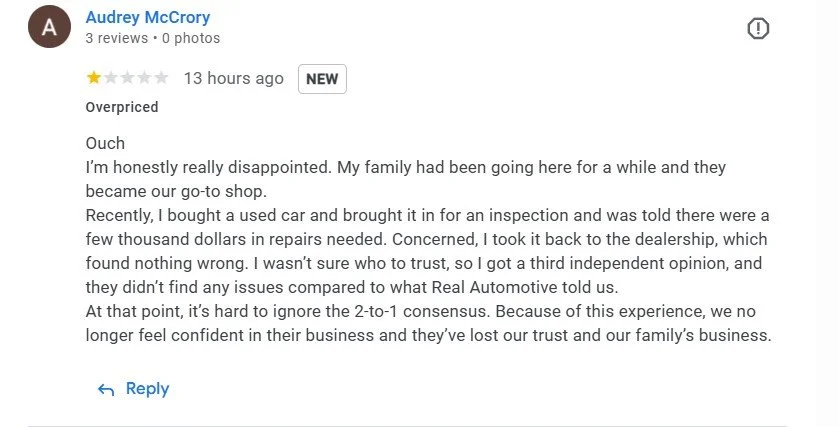
Hi Audrey, we’re genuinely disappointed to hear this, especially after your family has trusted us in the past. We have attempted to call several times, have left a voicemail, and texted as we would love the opportunity to talk about this issue.
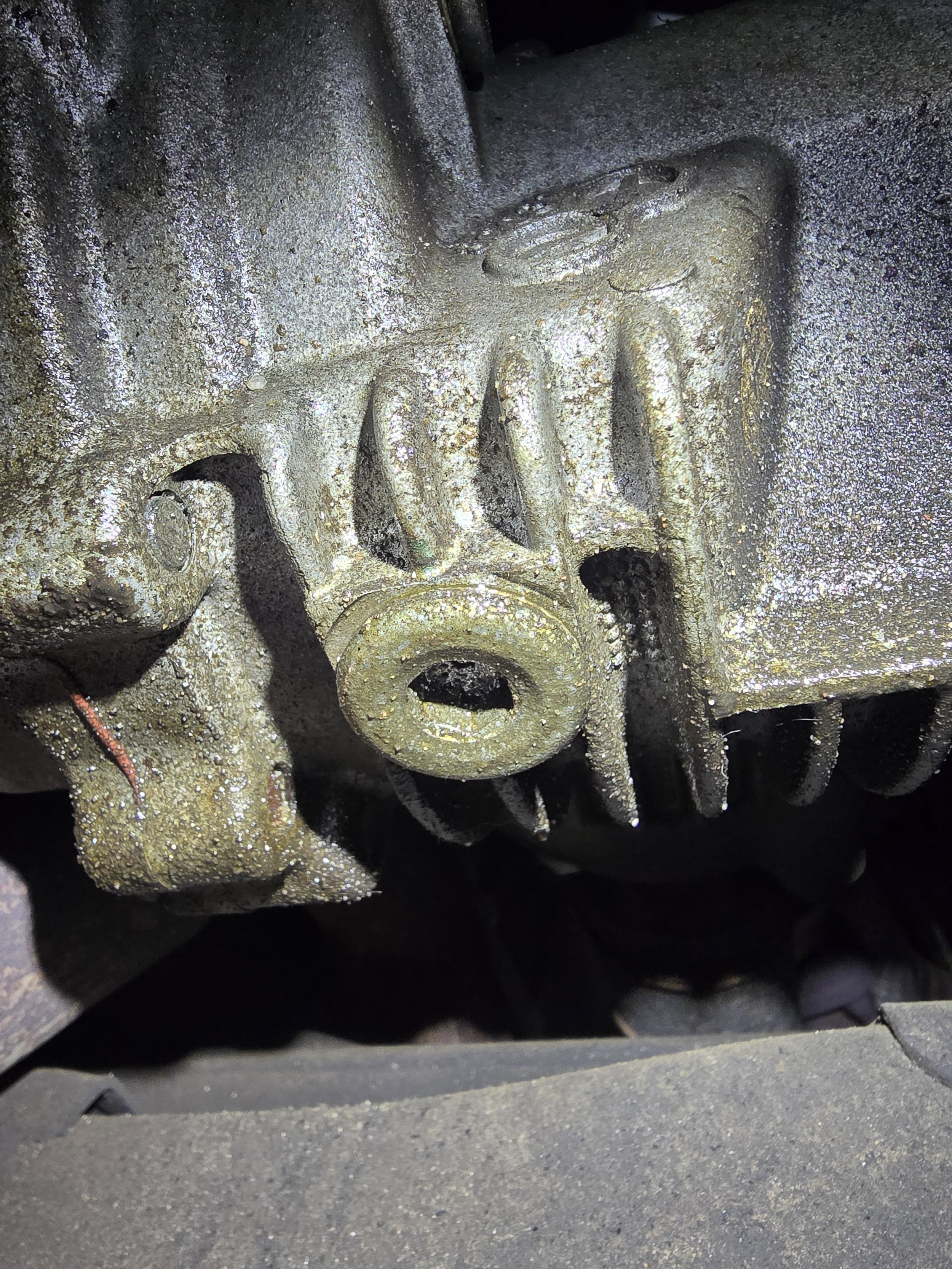
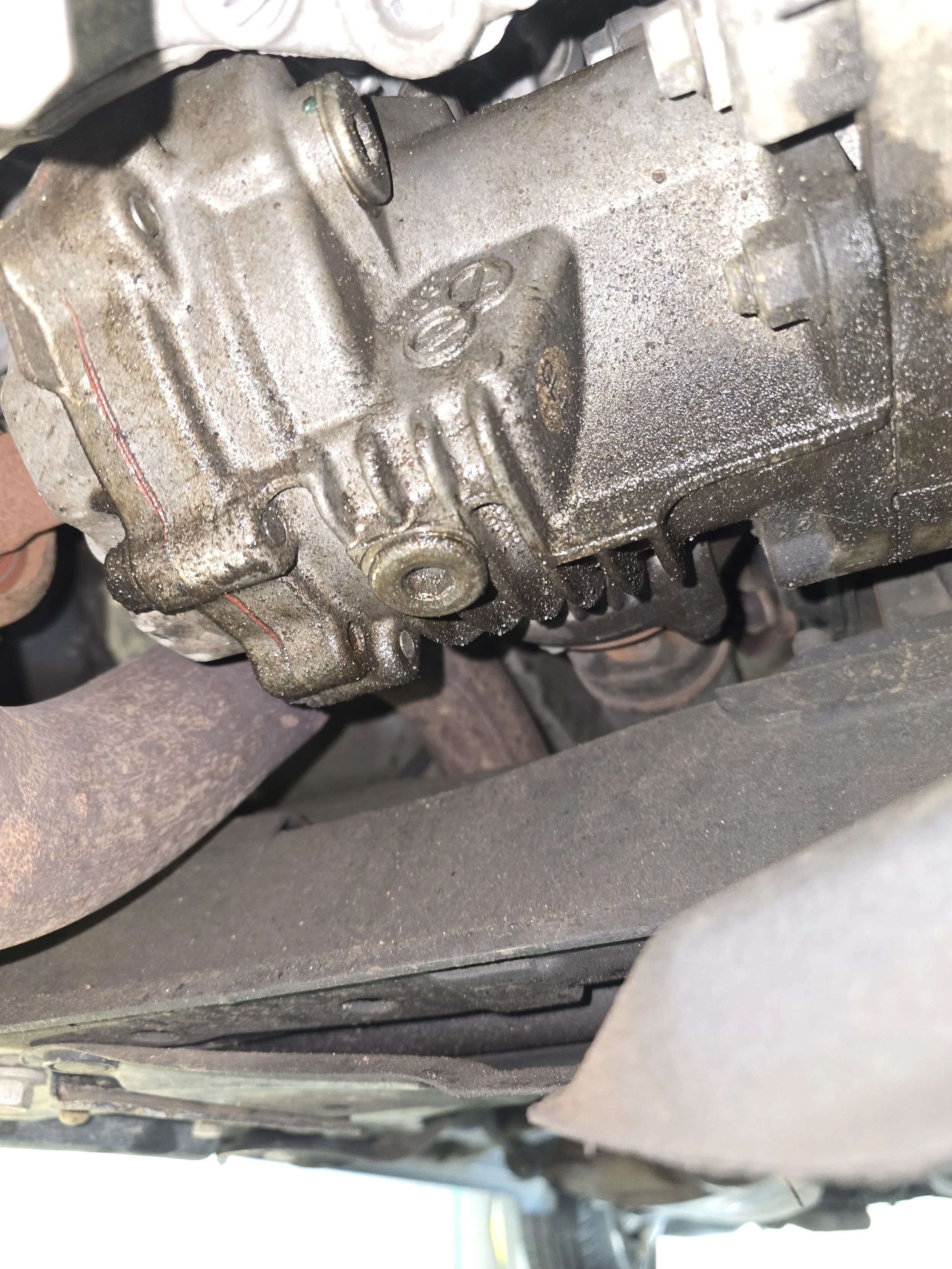
We want to provide some important clarity around your visit, because our inspection findings were fully documented with photos and notes. During your pre-purchase inspection, we identified multiple concerns that were visible at the time, including a fluid leak, very dark fluids, and abnormal tire wear. We have clear photos showing the transfer case leak, as well as the condition of your transmission and rear differential fluid, both of which were significantly dark and overdue for service. We also documented abnormal inner tire wear, which is a strong indicator that the alignment is off and needs correction.
You also mentioned an engine noise. Based on experience, we explained that while it could potentially be internal engine-related, we’ve seen similar cases present as piston slap. If our goal was to be dishonest or upsell, we could have easily pushed for a worst-case scenario like engine replacement, but we did not. Instead, we gave you an honest, experience-based assessment without jumping to conclusions.
It’s important to understand that a pre-purchase inspection is designed to show everything we see at face value in a limited timeframe so you can make an informed decision or take that information back to the selling dealership. Since the vehicle had already been purchased, our intention was to give you a complete picture upfront so you had leverage to address these concerns with them.
As for the statement that “nothing was wrong,” that is simply not accurate based on what we documented. In some cases, leaks can be cleaned off or may not immediately reappear depending on time and driving conditions. A full leak verification process typically involves cleaning the area, driving the vehicle, and reinspecting over time which goes beyond the scope of a standard pre-purchase inspection.
We stand behind our findings, our documentation, and our process. Our goal is always transparency and honesty, even when that information may not align with what someone else says. I know we spent time going over the inspection and explained everything with you at the time if the pre-purchase inspection but would be more than happy to sit down with you again and review the inspection, photos and findings directly so you can see exactly what we saw and hopefully clear up an miscommunication.
We’re truly sorry to hear that you’re this disappointed and feel the need to go elsewhere for future repairs as that’s never the outcome we want for any of our customers. We are absolutely here and willing to discuss this further, as it seems there may be some miscommunication or missing context regarding our findings and recommendations.
For full transparency, we will also be posting a detailed response on our website that includes the photos and video documentation from your inspection, since Google does not allow us to include that type of evidence in our replies. We encourage anyone reading this review to visit that section so they can see exactly what we observed and better understand the full picture.

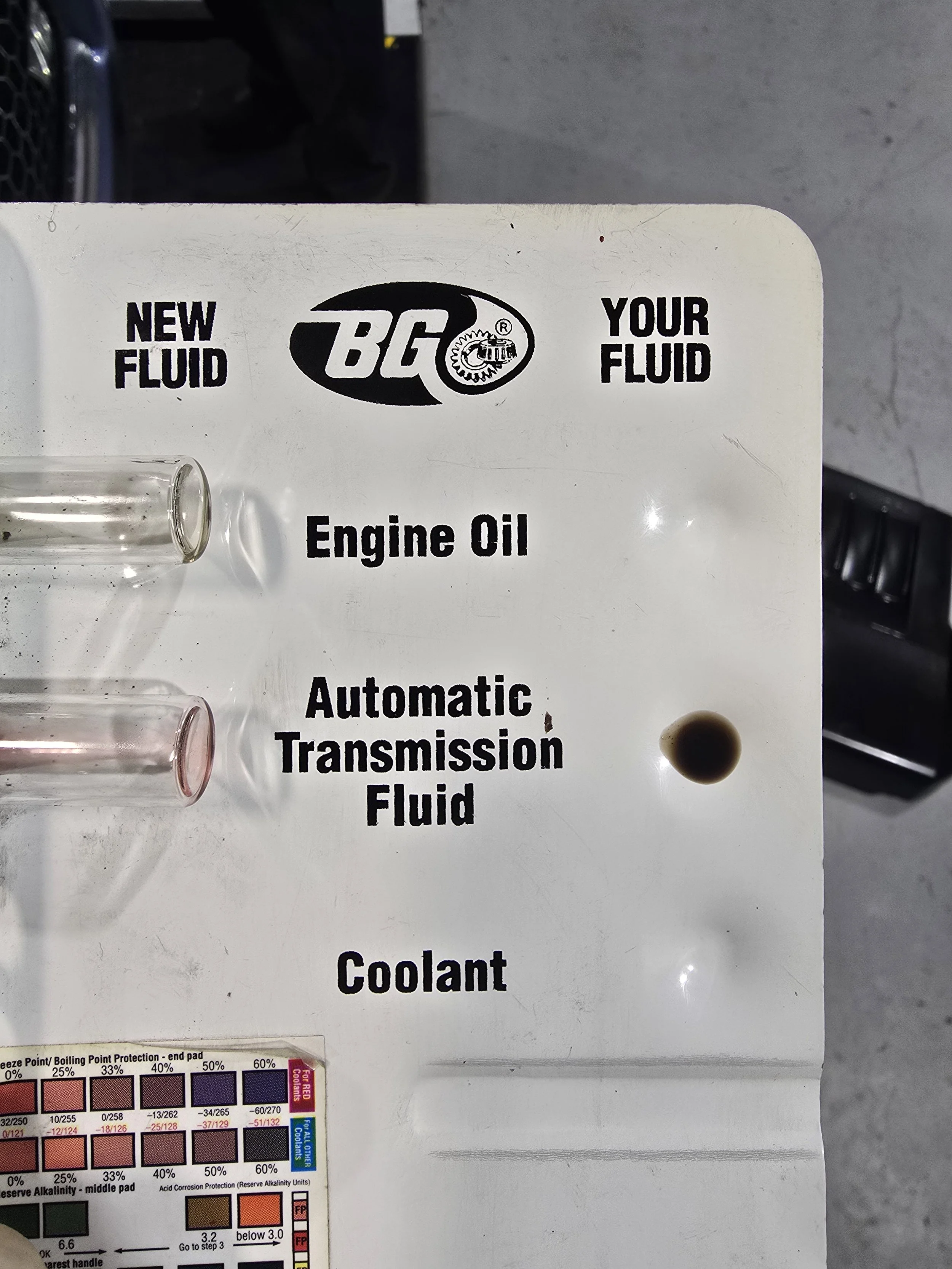
Transmission fluid plays a critical role in lubricating, cooling, and properly operating your transmission. In good condition, it should be a clean, bright red color. Over time, as the fluid breaks down from heat and wear, it becomes darker and less effective. In your case, the fluid is visibly very dark, which is a clear indicator that it is worn out and due for service to help protect the transmission and maintain proper performance. Here is the condition of the ATF in this vehicle.
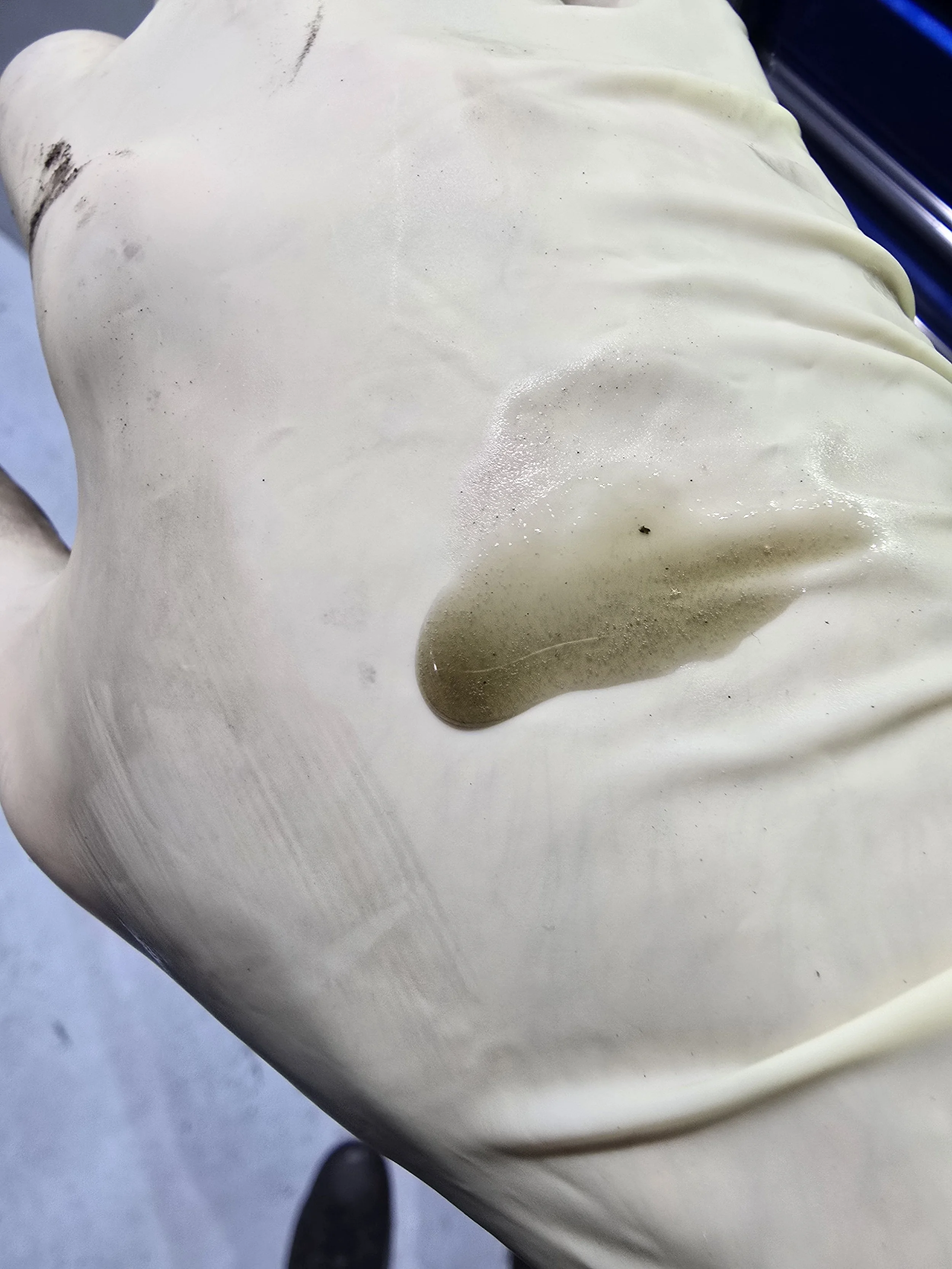
Rear differential fluid is responsible for lubricating the gears inside the differential, allowing them to operate smoothly and preventing excessive wear. In good condition, this fluid is typically a near-clear color with a slight light brown or amber tint. Over time, heat and normal use cause the fluid to break down, becoming darker and contaminated. When the fluid appears very dark, it is a clear sign that it has degraded and should be serviced to help protect the differential and ensure proper operation. Here is the sample from the vehicle.
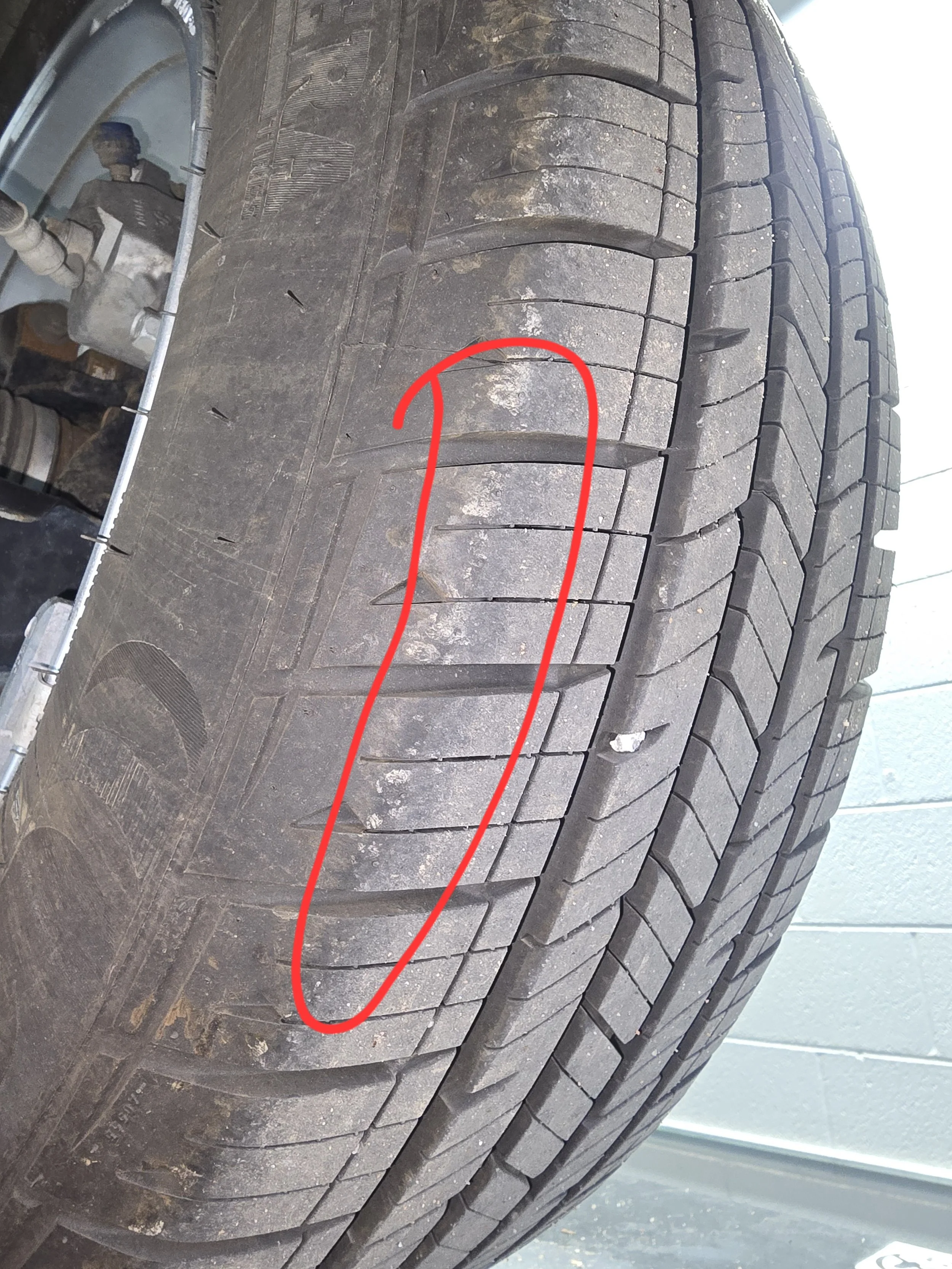
Abnormal tire wear is a strong indicator that something is off with the vehicle’s alignment or suspension. In this case, you can clearly see the excessive wear on the inside edge of the tire, which is circled in red. This type of inner edge wear does not occur under normal driving conditions and typically points to improper alignment. If left uncorrected, it will continue to wear the tires unevenly and prematurely. The proper next step is to address the alignment to prevent further tire damage and ensure the vehicle drives straight and safely.
The transfer case is responsible for distributing power between the front and rear of the vehicle, and it relies on being properly sealed to retain fluid. In this case, the photo clearly shows fluid present on the exterior of the transfer case, indicating an active leak from somewhere in that assembly. Based on our experience working on a high volume of Toyota vehicles, this is a very common failure point we see, and the proper repair in these situations is to remove and reseal the transfer case to stop the leak and prevent further fluid loss and potential damage.
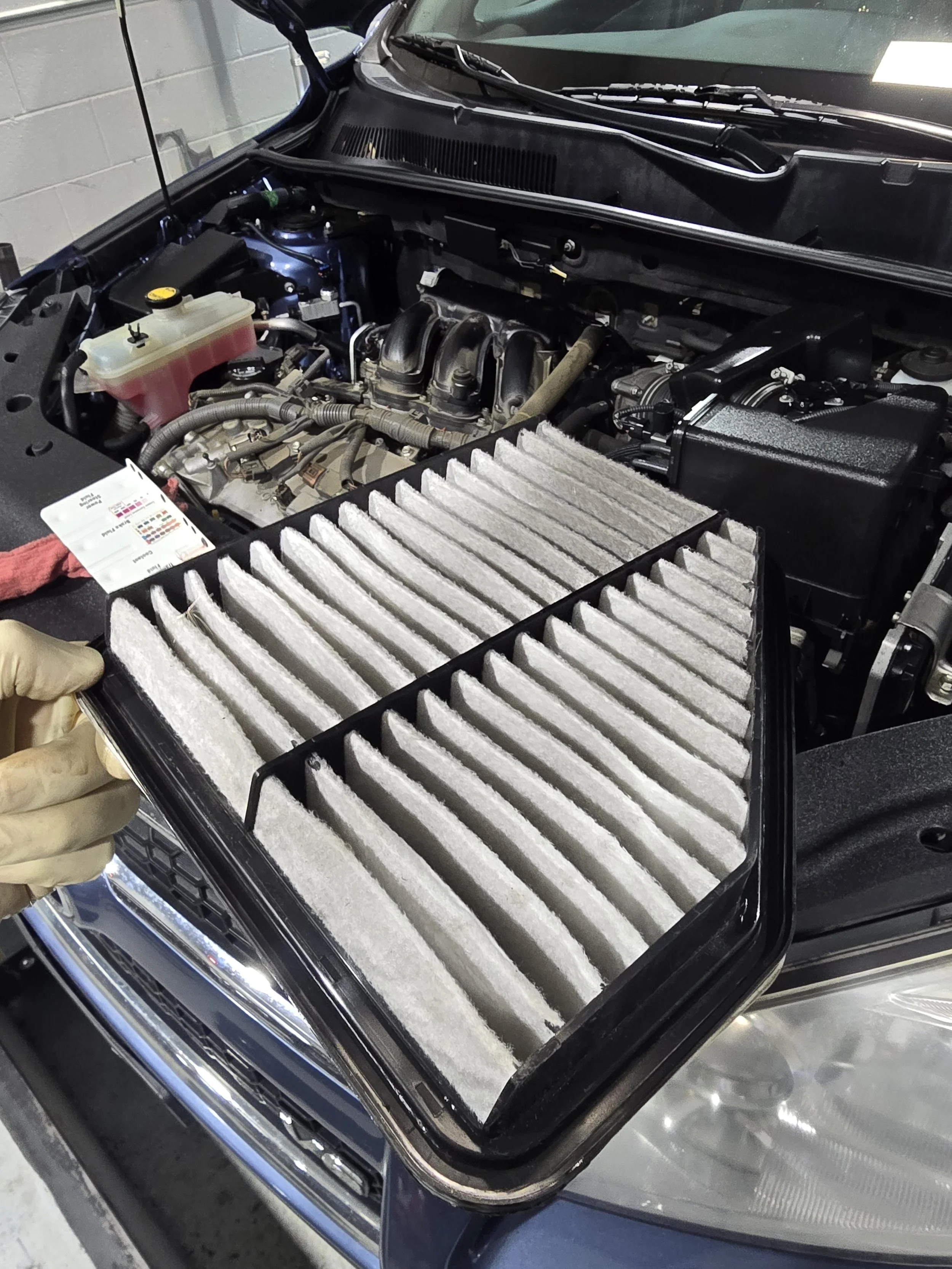
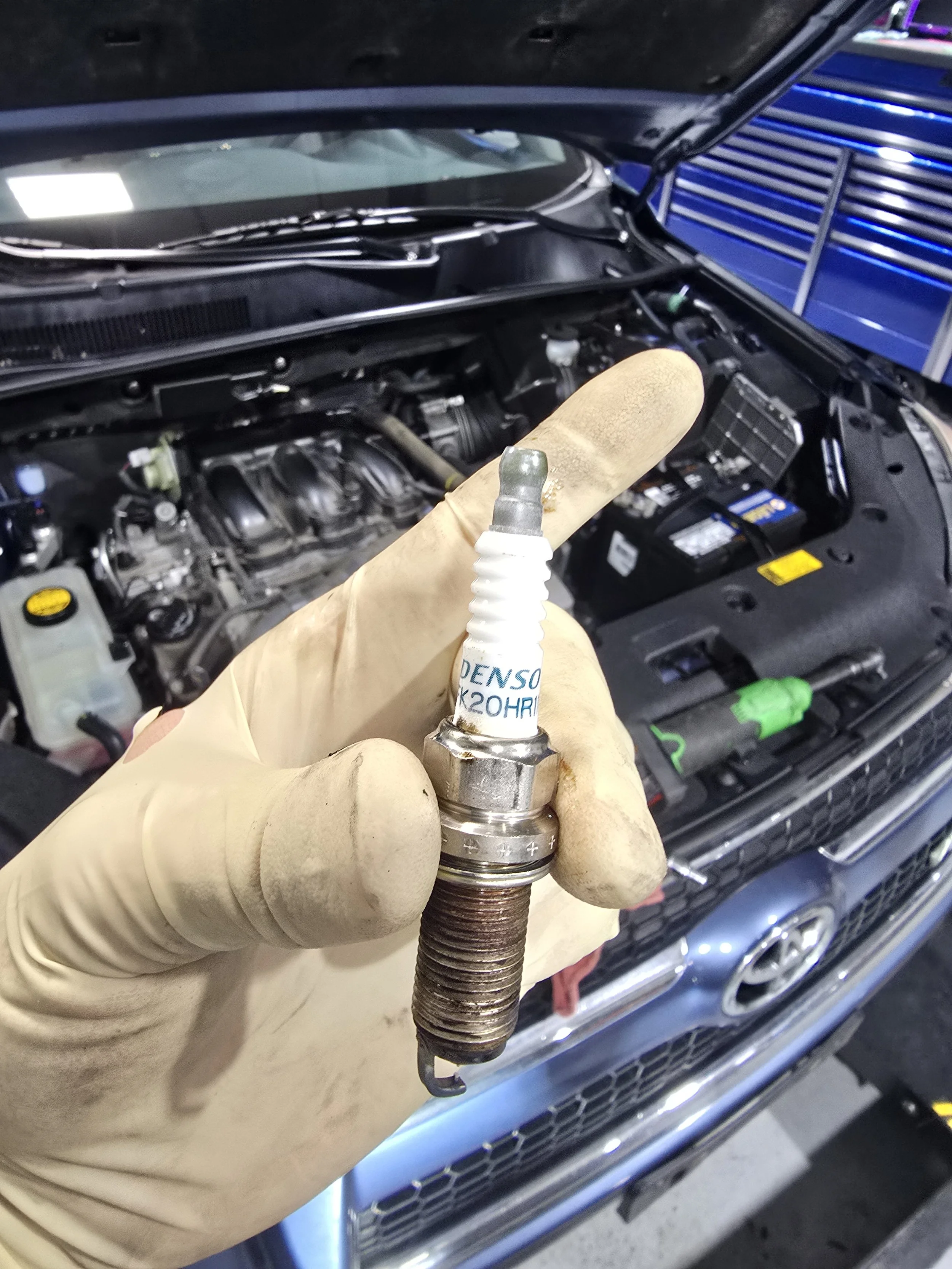
We also performed a general inspection of the rest of the vehicle and found several items to be in good condition. The spark plugs do show signs of age but are not due for replacement at this time. The engine air filter is clean and functioning properly. The battery was tested under load and is performing well. The brake pad thickness was well within specification and no attention is needed. Additionally, the brake fluid appears clean inside the reservoir, and the coolant is in great condition. We also scan the vehicle to verify all computer monitors have ran and that the vehicle hasn’t had any check engine lights cleared recently. Overall, these are all positive findings and reflect areas of the vehicle that are currently in proper working order.
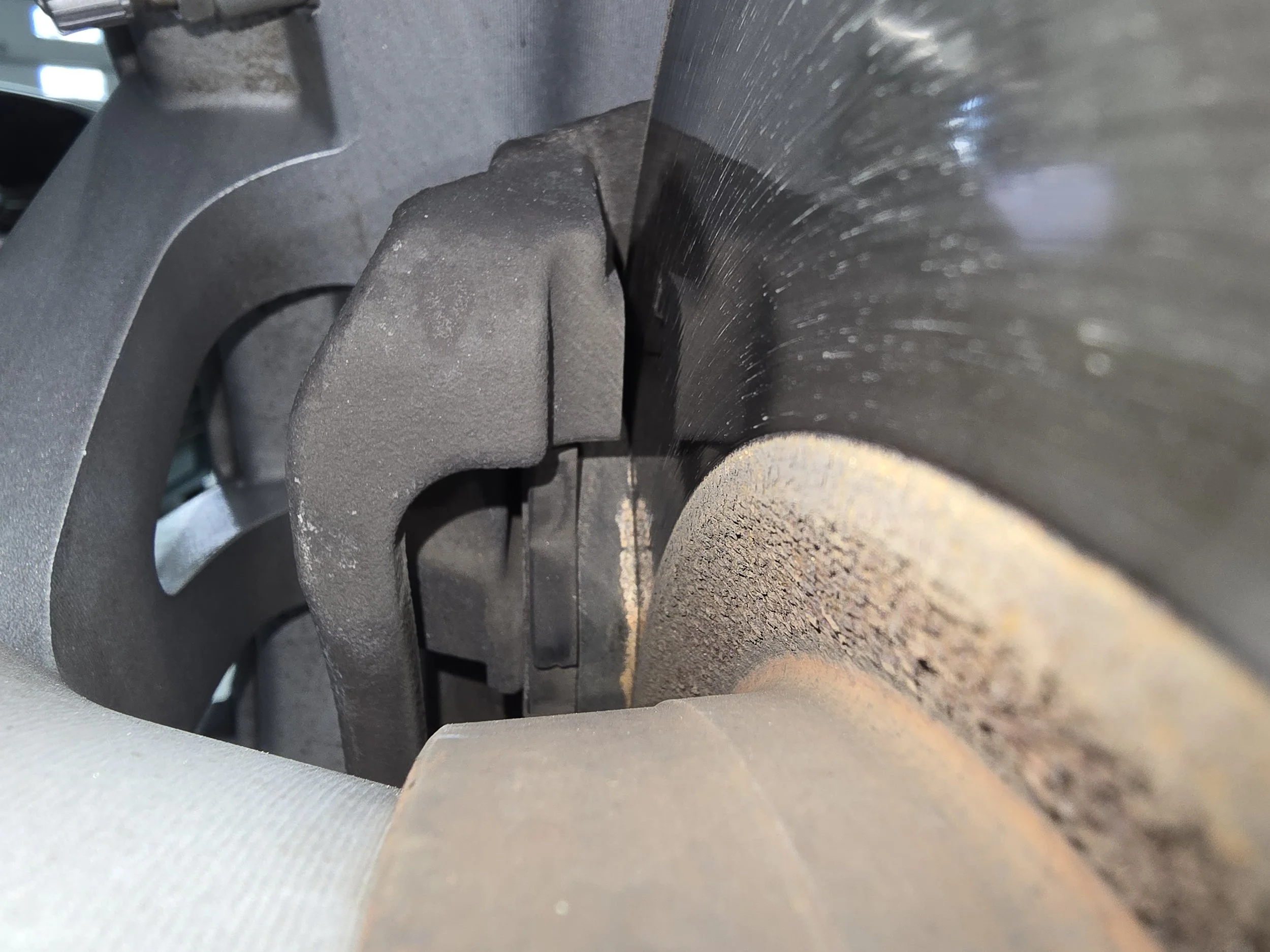
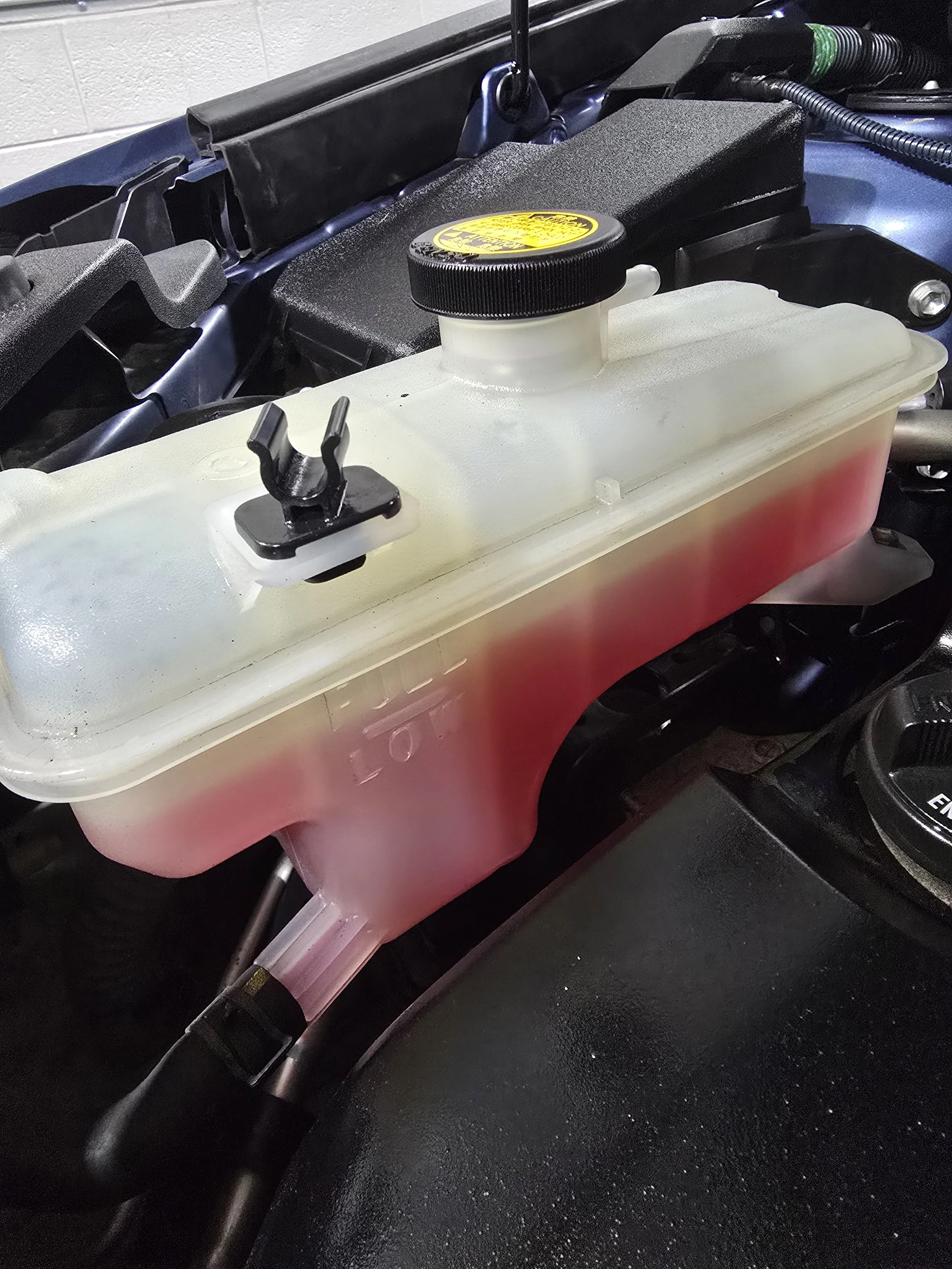
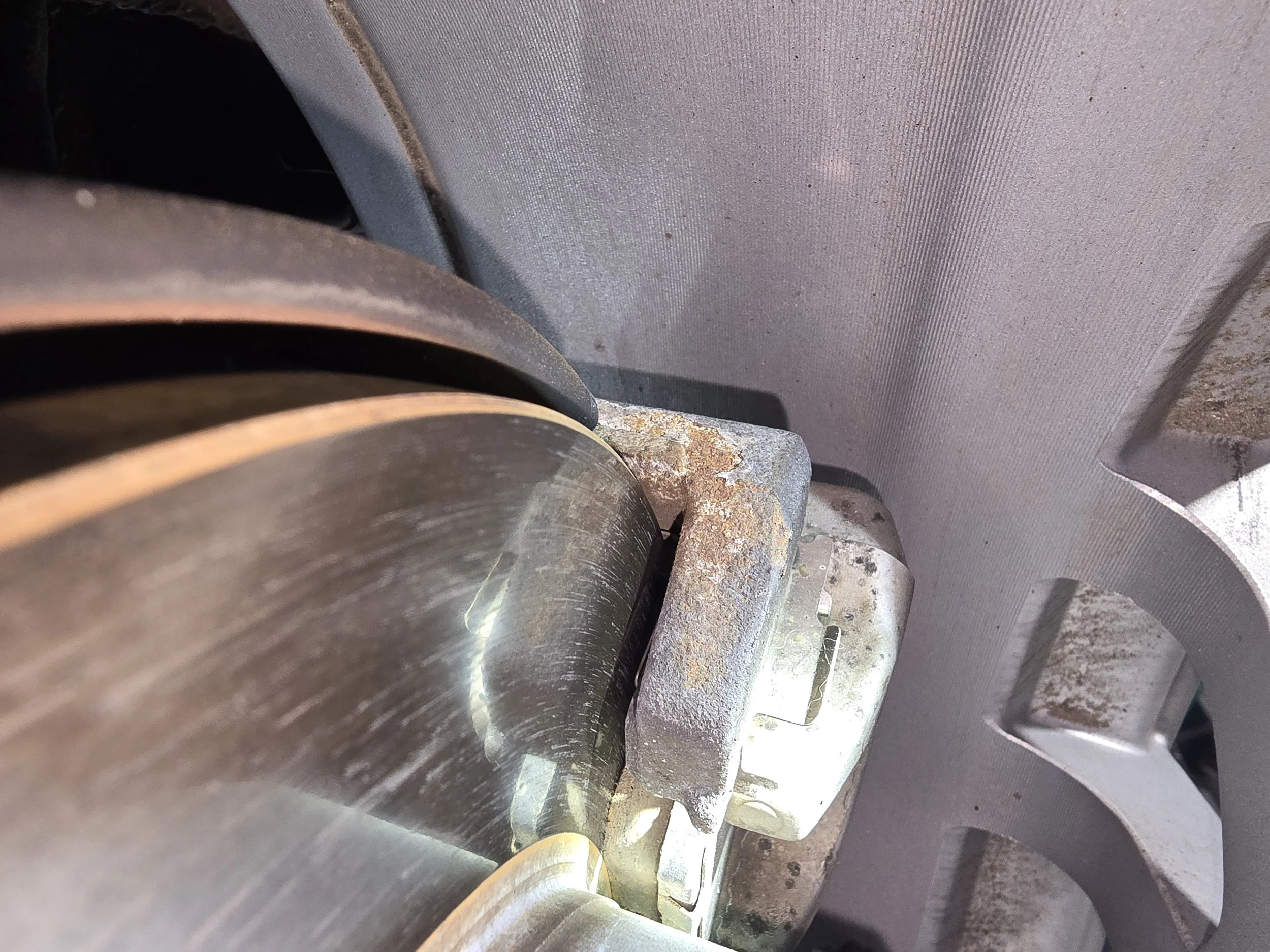
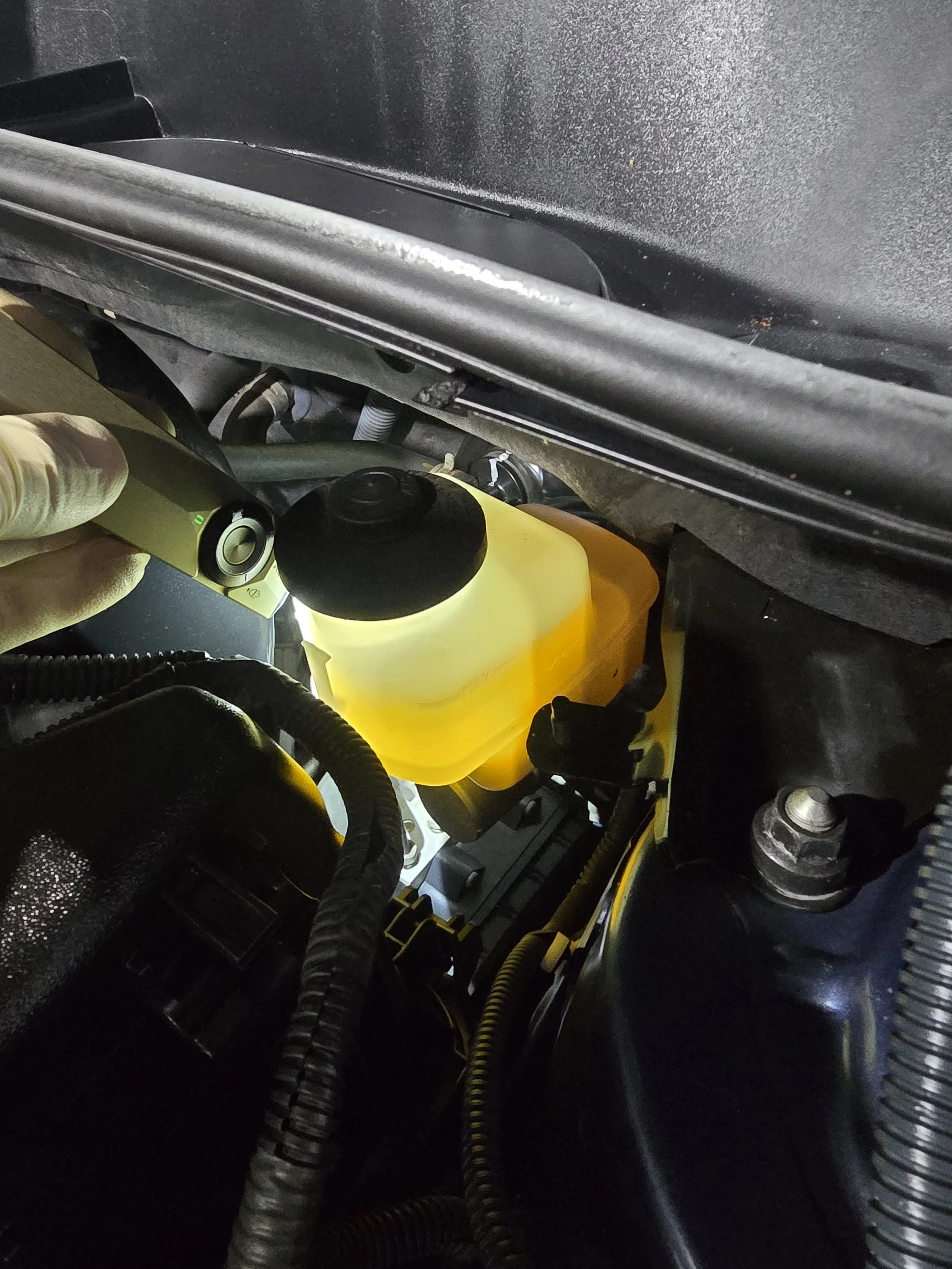
To be clear, our goal here is not to argue or place blame on anyone. We stand for honesty, clarity, and transparency in everything we do. When a situation like this is presented, where it’s suggested that we’ve made unusual or inaccurate recommendations and that nothing is wrong with the vehicle, it’s important for us to provide full context. This section simply gives us the opportunity to show the public, with clear documentation, that this is not the case and that our findings were based on what was visibly present at the time of inspection.